
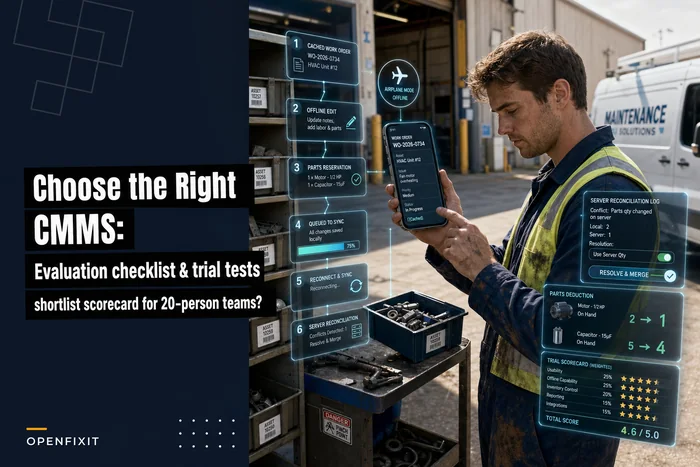
How to Choose a CMMS for a 20‑Person Facilities Team: Evaluation Criteria, Trial Tests and a Shortlist Scorecard
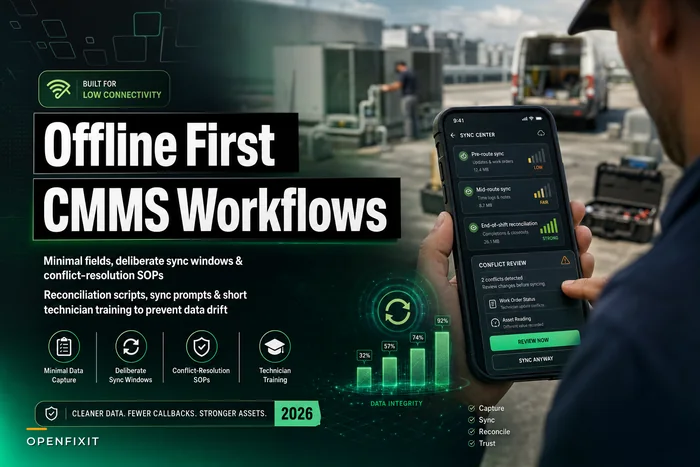
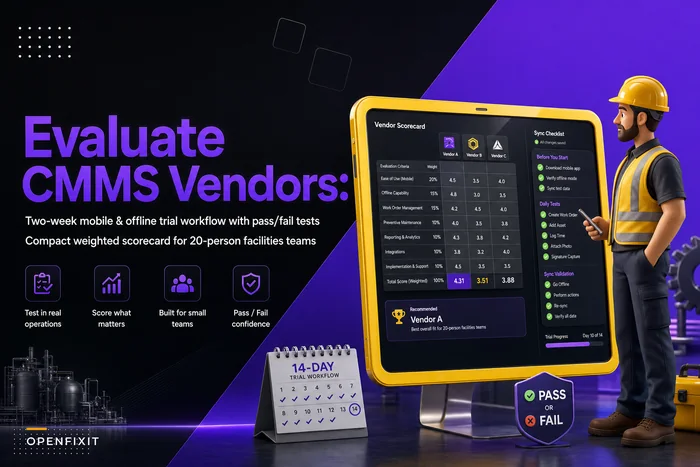
A practical, evergreen guide to evaluate and shortlist CMMS vendors when you manage a 20‑person facilities team and must prioritize asset tracking, preventive maintenance scheduling, spare‑parts inventory, and offline mobile work orders. The article includes: - A compact set of evaluation criteria grouped by priority for small teams (core features, mobile/offline behavior, inventory and parts workflows, integrations, reporting, security, support and pricing). - A downloadable vendor scorecard template (0–5 scores, weighted categories) with a recommended weighting example tailored to a 20‑person team, plus pass/fail gates and an overall shortlist cutoff. - Step‑by‑step trial scripts to run during vendor demos/trials (realistic scenarios to test offline mobile work orders, QR/barcode scanning, parts reservation & auto‑deduction, PM creation from sensor alerts, SSO and API connectivity). Each script lists setup steps, success criteria, what to measure (latency, sync time, conflict resolution), and sample data to preload. - Required integrations to validate during trials (BAS/IoT → automated WO generation, purchasing/ERP, inventory/purchase order link, SSO/LDAP, HR/scheduler for crew assignments, ticketing, and building access systems). - A short set of mobile feature tests (offline create/edit/complete WOs, photo/location/stamp, parts pick/return, local caching limits, sync conflict handling, background sync/low‑bandwidth behavior) and performance thresholds to use as acceptance criteria. - A worked example applying the scorecard to three hypothetical vendors so teams can see how to rank and make a shortlist decision quickly. - Red flags and procurement questions to ask (data ownership, export formats, SLA for offline support, API rate limits, add‑on costs for inventory or mobile). - Suggested KPIs to track in the pilot (time to close mobile WO, PM compliance, parts reserved vs used, sync failure rate) and a recommended trial duration and data set to use. The guide intentionally avoids heat‑event triage steps; it complements operational playbooks by ensuring your CMMS can support those emergency workflows through tested integrations and robust mobile capabilities.